HefPro has always been known for our forklift, reach truck, and EPT training. But we're growing. From now on, we also deliver official aerial work platform (AWP) certification — for classes 1B, 3A, and 3B, fully compliant with health and safety legislation, at your site. In this article we explain what that means, which equipment it covers, and why proper AWP training is something you simply can't skip.
What is an aerial work platform and what classes are there?
An aerial work platform is a machine that allows people to work at height. Think of maintenance on buildings, installations, light columns, or ceilings in large warehouses. There are several types of AWPs, each with their own characteristics and risks.
Class 1B covers the static boom: telescopic and articulating boom lifts equipped with outriggers, trailer- or chassis-mounted platforms, and spider lifts. The machine rests stable on outriggers during operation. Because the machine doesn't move while in use, knowledge of reach, load capacity, and ground bearing pressure is essential.
Class 3A covers self-propelled scissor lifts and single-person vertical lifts — machines that move straight up and can be driven while elevated. They are widely used in warehouses and production facilities and require knowledge of stability, floor load limits, and safety rules at height.
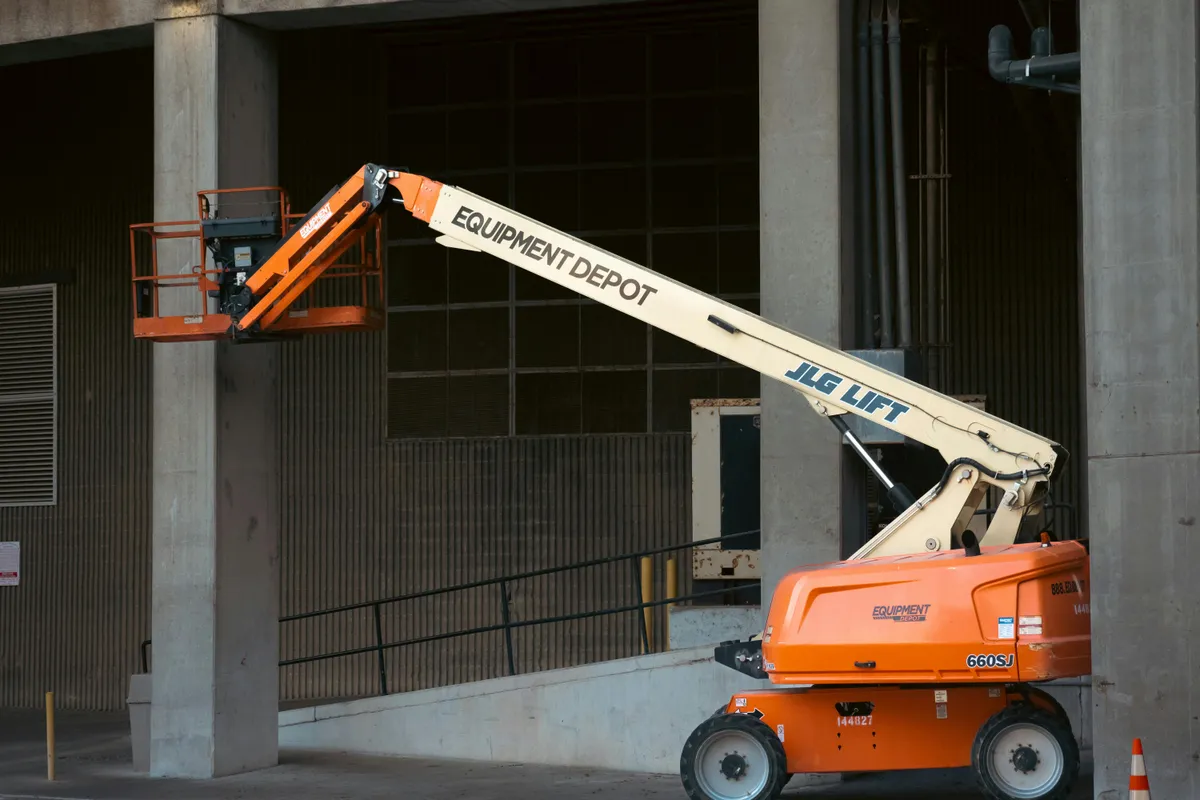
Class 3B covers self-propelled telescopic and articulating boom lifts (boom lift / knuckle boom). These machines combine vertical and horizontal movement and can be driven while elevated. The centre of gravity shifts considerably when the boom extends — without proper training, hazardous situations arise quickly.
Why is a certificate required?
Health and safety legislation is clear: anyone operating an aerial work platform must be demonstrably competent. Just as with forklifts, the employer is responsible for deploying authorised personnel. An employee operating an AWP without a certificate is not only a risk to themselves, but also a legal liability for the company. In the event of an incident without demonstrable training, the employer's liability can be significantly greater.
You choose which class you need
The advantage of our approach is that you don't need to train for all classes. Does your company only have a scissor lift? Then we train for class 3A only. Have multiple types? We combine them smartly into a single day. You pay for what you need — nothing more.
And as always with HefPro: we come to you. Your employees don't need to leave the site. The training takes place on the machines they use every day, in the environment they know. That makes it immediately applicable.
What does AWP training at HefPro look like?
The training begins with theory: legislation, safety rules, fall protection, and hazard recognition at height. This is followed by extensive practical training on the machine. Participants learn how to set up the AWP, move safely up and down, work near obstacles, and what to do in the event of a malfunction or emergency.
The training concludes with a practical assessment. A pass means a certificate is issued for each class completed.